When the Climate & Storm Preparedness Systems Aren't the Problem
/Daniel Kreeger | July 25, 2025
I was on CGTN this week with Sean Callebs to talk about emergency preparedness. Texas Hill Country still fresh in all of our minds, hurricane season starting back up, and FEMA being scrutinized in court. The format of appearing on TV news gives me only a short response to keep the conversation going, so here is a longer version of related thoughts.
Some Places are Well Rehearsed … but Most Are Not
Coastal Florida has signs every quarter mile pointing to evacuation routes. In our smaller and more residential communities, people who have lived here for a long time know which neighbor has a generator, where the storm surge stops being survivable, and when to leave. South Florida’s climate resilience isn’t an accident, it’s rehearsal that goes back to Hurricane Andrew (and earlier), and a lot of experience with what happens when we are not prepared.
The places that get hit hardest right now are not the rehearsed places:
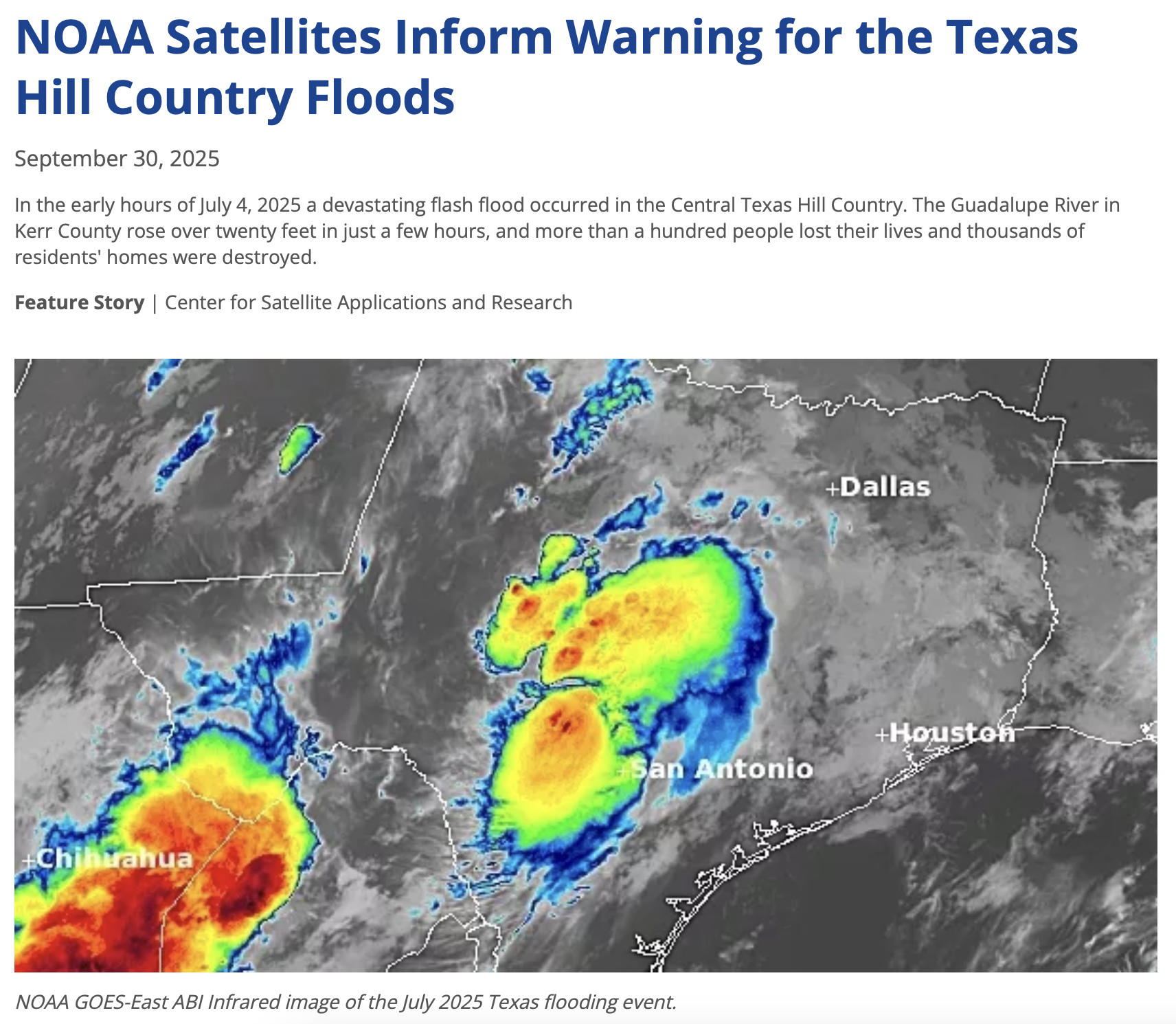
The Hill Country flood killed more than a hundred people in a region that hadn't thought of itself as flash-flood country.
Western North Carolina got tropical storm flooding last fall in spots that hadn't flooded in living memory.
The Grand Canyon's North Rim is on fire as I write this.
None of these places had failed equipment. Most had failed acceptance.
The Cultural Gap Comes Before the Operational Gap
That's the part the news keeps missing. "Did the sirens work?" is the wrong question when a community has not accepted that it needs sirens and alarms. You can put a new flood gauge on the river, and you should. But if no one treats the reading as actionable, then the gauge is merely a decoration.
The work that closes the cultural gap is being dismantled. The FEMA BRIC program that twenty states are now suing to preserve funds exactly the kind of multi-year work that moves a community from "this won't happen here" to "we know what to do when it does." Cutting that funding doesn't just remove dollars. It removes the year-after-year work that builds memory and habit.
Disasters are events and disaster preparedness is a culture. Cultures take decades to build, but only a budget cycle or two to lose.
20 Years after Hurricane Katrina
Next month will mark twenty years since Hurricane Katrina devastated New Orleans. Subsequent to the disaster, it produced real reforms:
at FEMA;
in floodplain management; and
in how states coordinated with the Federal government.
Those reforms were never automatic, and now, some are being undone. Unfortunately, some of those reforms never fully took root.
The question is not whether we have the technical capacity to prepare … because we absolutely do. The question is whether we have the patience to build the culture that actually uses it, and whether we can shift from politics to defensible planning and action.
Large Organizations Face the Same Kinds of Problems
This is also the work climate change officers and professionals are charged with doing. A company that has not accepted its climate risk, looks operationally identical to a town that has not accepted its flood risk. The systems exist, the procedures and processes exist, and the decision-support resources and tools exist. But if there is no one to do the integration work to make them usable when it counts, then we have a problem.
That gap is what the climate change professional was envisioned to address when we started building ACCO in 2008.
Where We Stand Today
While I'm not optimistic about the Federal picture during the current Administration’s term in the United States executive branch, the climate resilience work continues at the state, regional, organizational, and individual scales. It matters more, not less, when the top layer is being pulled out. Communities that build their preparedness culture now, with whatever they have, will look very different in five years from the ones that wait.
And the same goes for other types of organizations.
Watch the segment on YouTube →
— Dan