Data Center Siting and the Energy-Water Nexus
/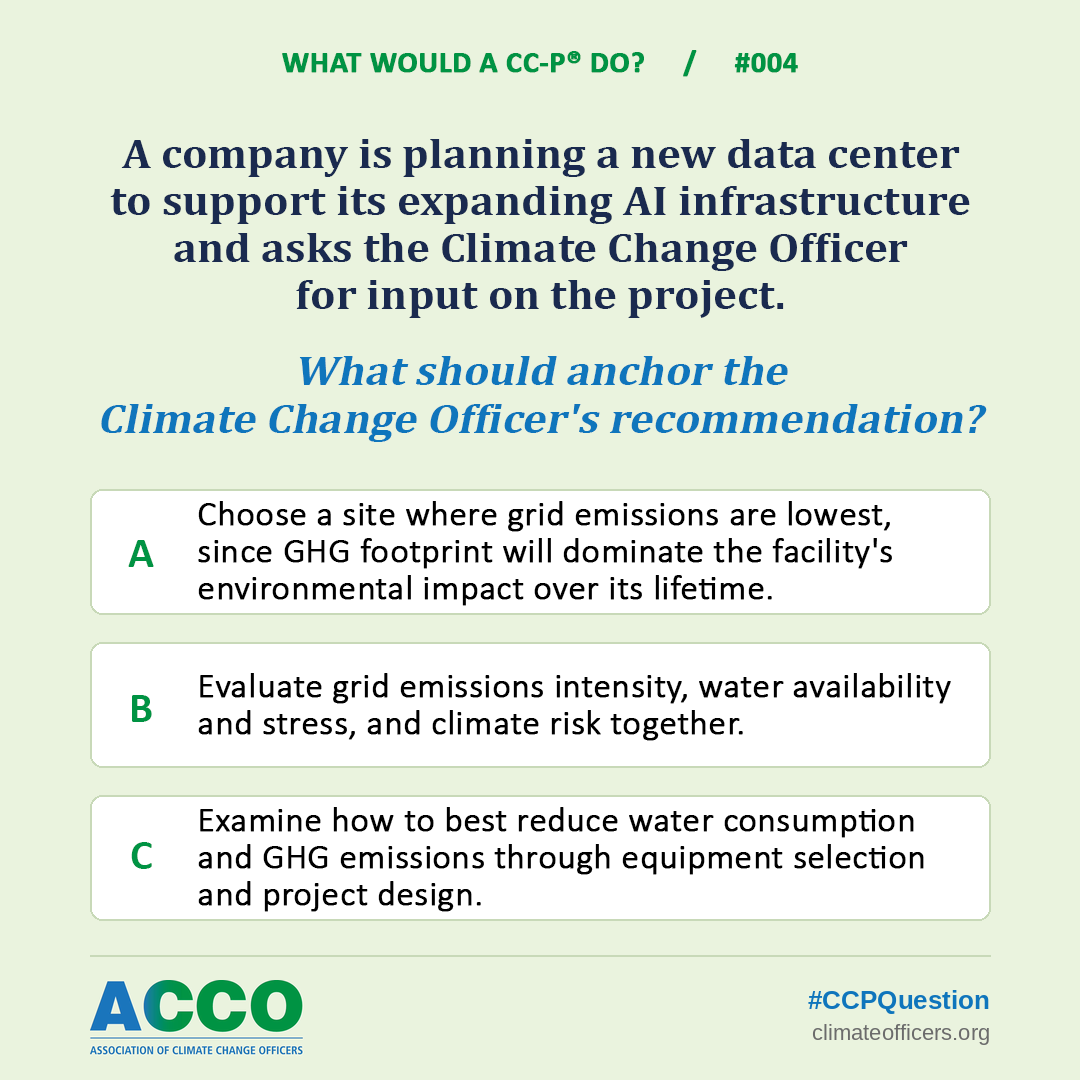
A company asks for input on siting a new AI data center. Test your thinking with this CC-P® practitioner scenario on the energy-water nexus.
Read MoreEvery week, we put a real situation in front of you and ask what a CC-P® would do about it. Three plausible options. One answer that holds up under scrutiny. The reasoning is what matters most. Test your judgment. Compare it to ours. See how the field of practice thinks and what the expectation of a CC-P® professional would be.
A company asks for input on siting a new AI data center. Test your thinking with this CC-P® practitioner scenario on the energy-water nexus.
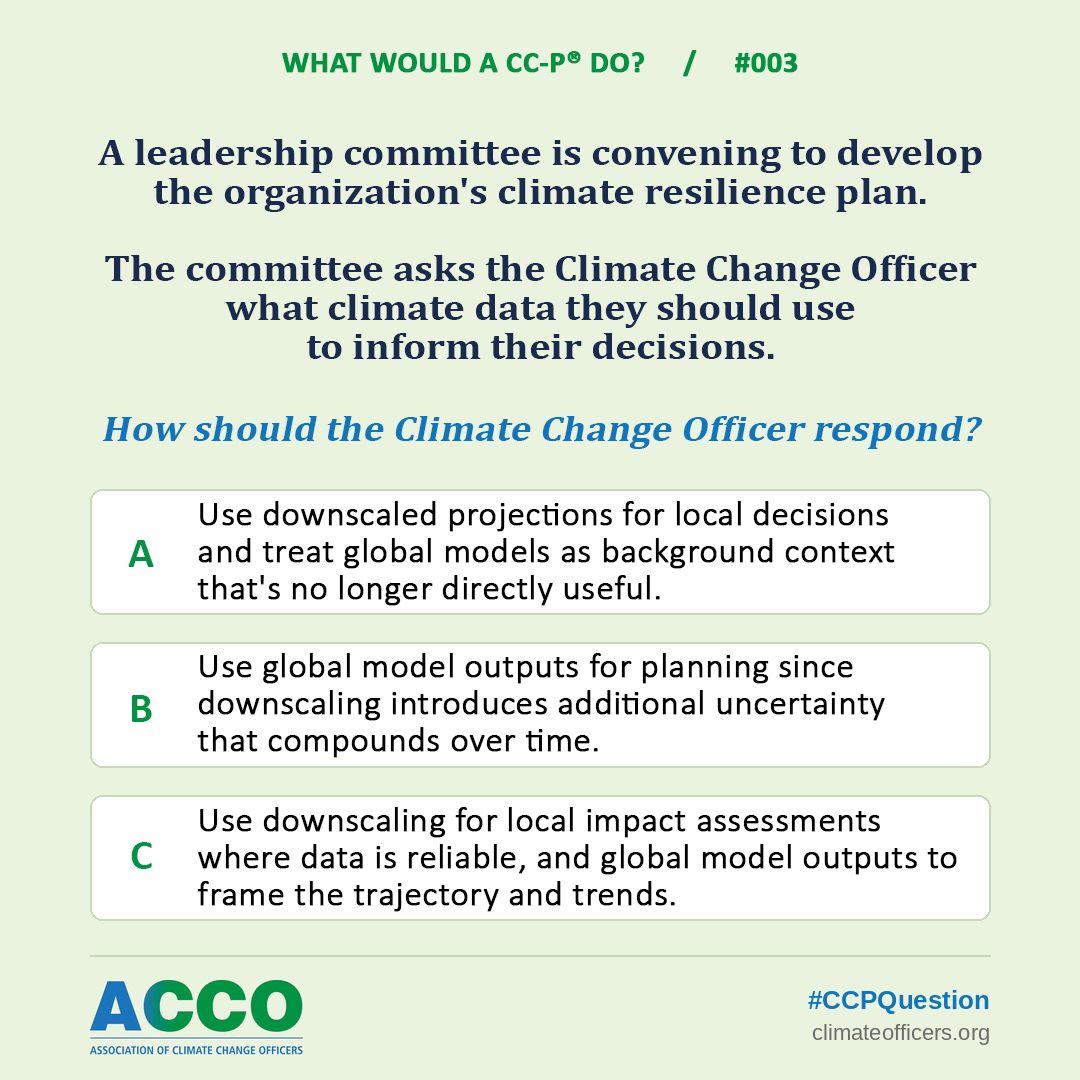
Read MoreA leadership committee asks what climate data should inform a resilience plan. Test your thinking with this CC-P® practitioner scenario.
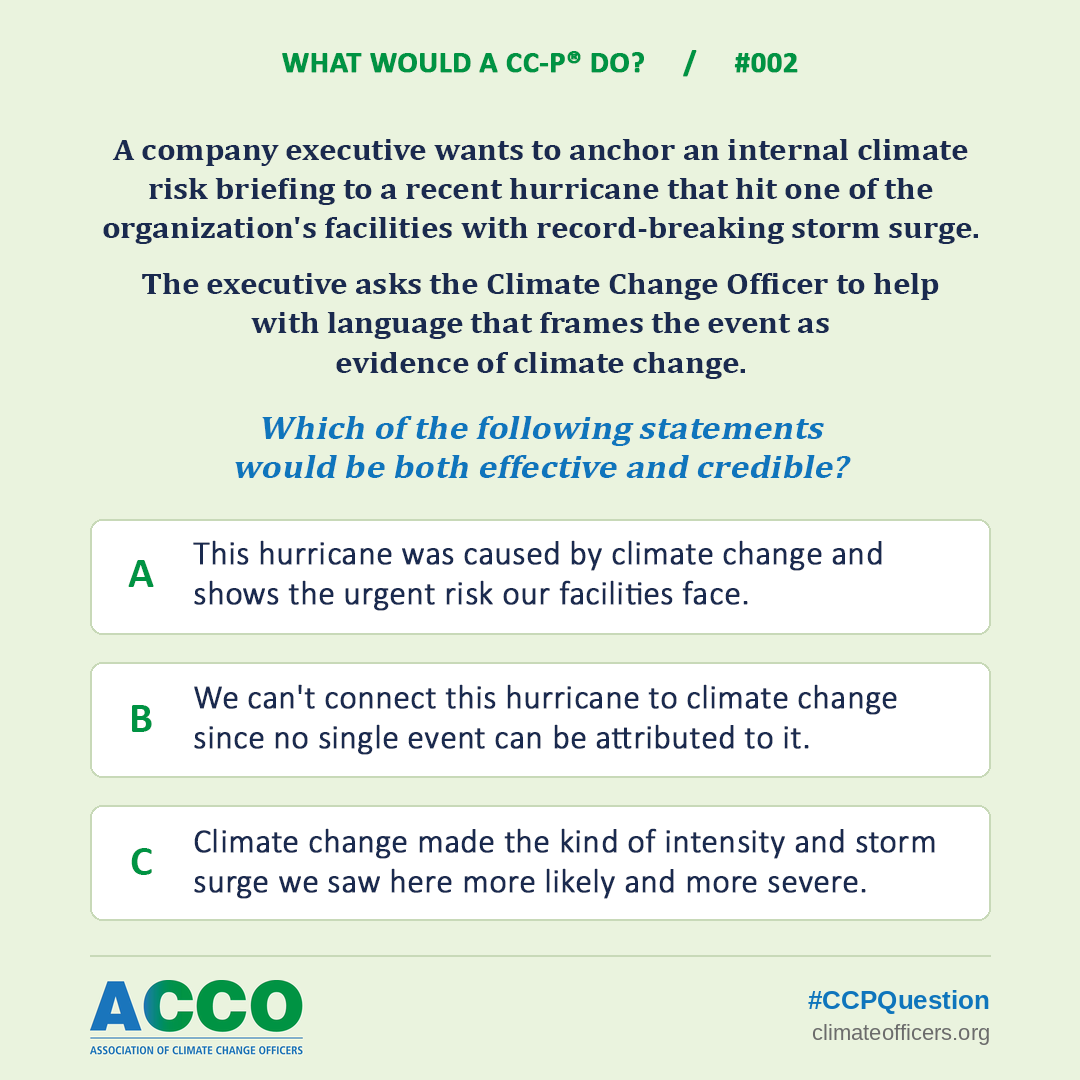
Read MoreA hurricane caused by climate change. Is that right?
Read MoreA company executive wants to anchor an internal climate risk briefing to a recent hurricane that hit one of the organization's facilities with record-breaking storm surge. The executive asks the Climate Change Officer to help with language that frames the event as evidence of climate change.
New questions drop every other week on ACCO's LinkedIn page with the hashtag #CCPQuestion. Each question will be archived here as well.
There is long historical context to hurricanes happening well before anthropogenic climate change. But in the past few decades, climate change has measurably increased the conditions that make those storm events strengthen more suddenly and cause more devastation than in years past:
Attribution science can now quantify how much more likely or how much more severe specific event characteristics were made by climate change.
Option A overstates the science by treating the storm as caused by climate change. Option B understates it by treating attribution as off-limits, a position that no longer reflects where the science is.
A CC-P® names what climate change actually did: it shifted the probabilities and intensities of the conditions producing the event. That language prepares the executive to discuss organizational risk in terms grounded in current attribution science, not in over-claims or outdated caution.
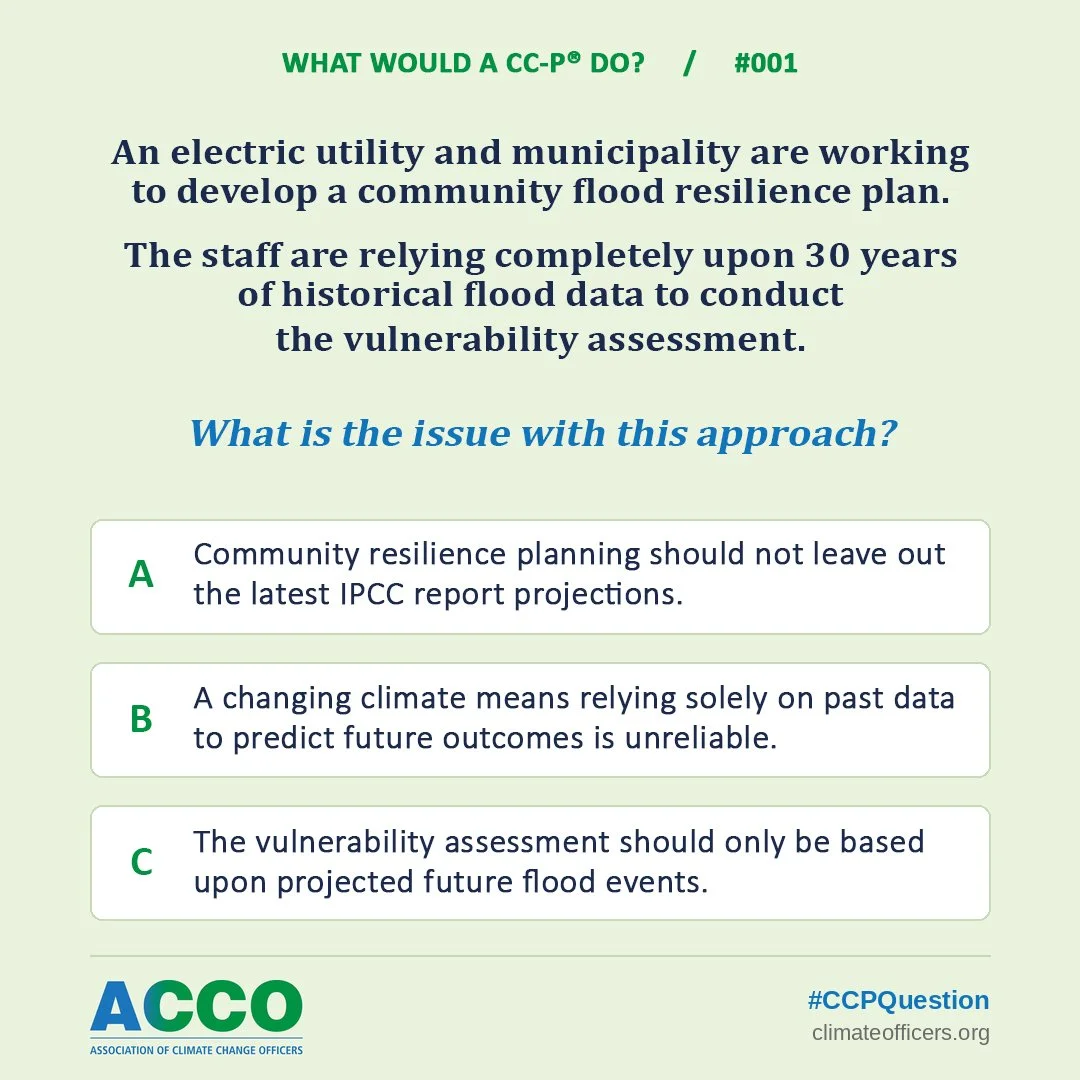
A community flood resilience plan built on 30 years of historical data. What's wrong with that approach?
Read MoreA community flood resilience plan built on 30 years of historical data. What's wrong with that approach?
Read More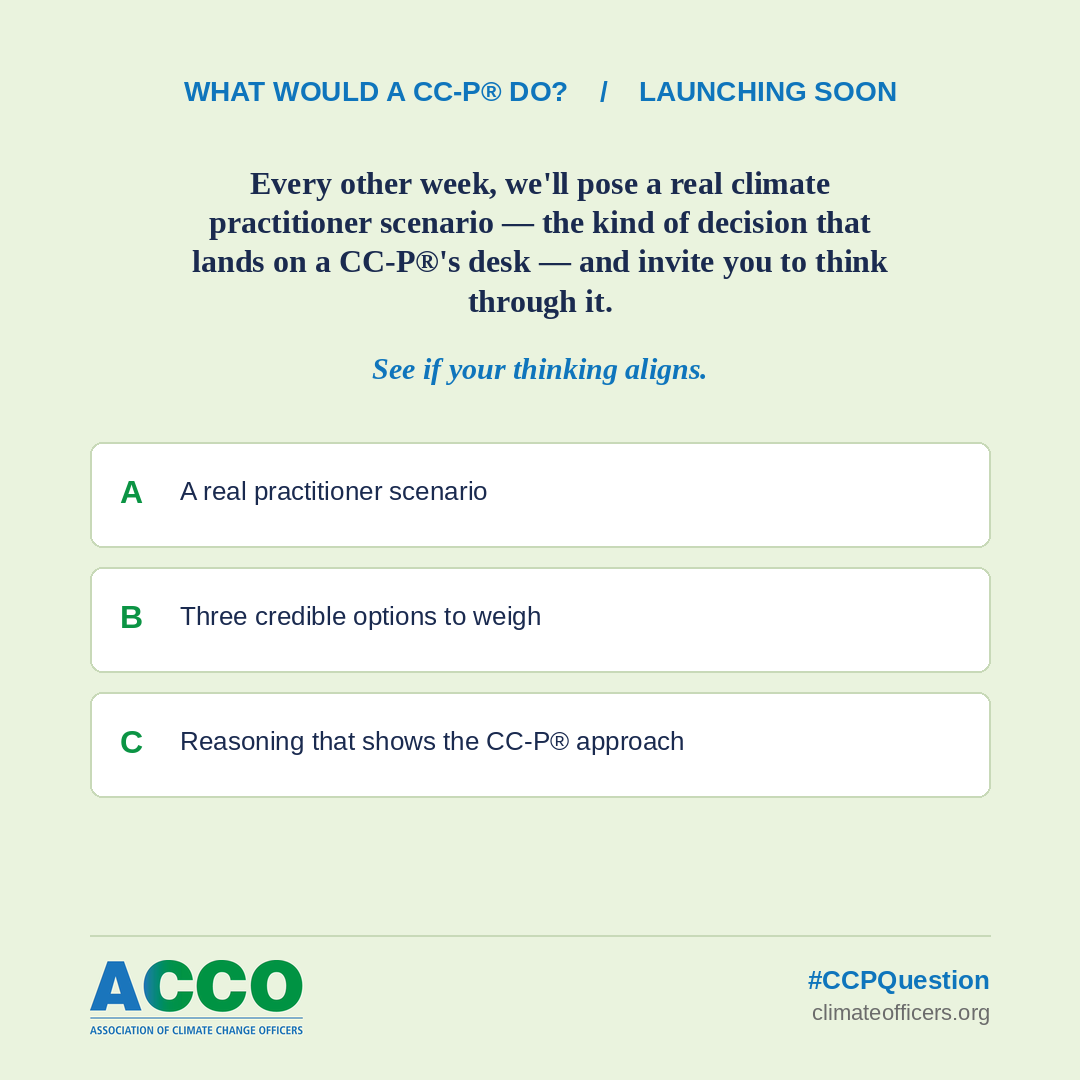
Every week, we publish a single question built around a real situation a climate change professional might encounter. Three plausible answers. One that holds up. A short reasoning paragraph that explains why the others fall short.
The format is simple by design. Commit to an answer before the reasoning is revealed. Then read why.
A CC-P® works at the intersection of climate science, governance, risk, GHG accounting, and decision support. The work shows up as judgment calls, choices about which framework applies, which data to trust, how to translate a technical finding into something a board or a community can act upon.
This series puts those judgment calls in front of you. Some you'll answer correctly without thinking. Others will surface the reasoning that separates a working answer from a defensible one. Either way, you get a window into what the Certified Climate Change Professional® (CC-P®) credential is built around.
For prospective candidates, it's a way to test your readiness. For hiring managers, it's a sample of the work product the credential signals. For practicing CC-P® holders, it's a check on your own thinking.
New questions drop every other week on ACCO's LinkedIn page with the hashtag #CCPQuestion. Each question will be archived here as well.